Gluco Armor Review: We Read the Label Behind the Viral Ads
Reviewed by Daniel Marques, independent supplement reviewer · Updated June 2026
Gluco Armor is a once-daily capsule marketed to adults who want to support healthy blood sugar metabolism that's already within the normal range. Credit where due: its Supplement Facts label discloses all 20 ingredient doses — rare in this category. But the doses that transparency reveals, the cheap mineral forms, and the swamp of fake-celebrity ads promoting it are why this is one of the few products we don't recommend. We have no affiliate relationship with Gluco Armor; here's exactly what we found.
See Our Top-Rated Alternative InsteadThe label-vs-ads breakdown is further down. Read the cons first.
Quick Verdict
Not recommended. The fully disclosed label is a genuine plus — but it shows botanicals at 25–50 mg token doses, minerals in low-absorption oxide forms, and the product is pushed by ads using fake celebrity endorsements and promises no supplement can keep.
See What We Recommend InsteadWhat Is Gluco Armor?
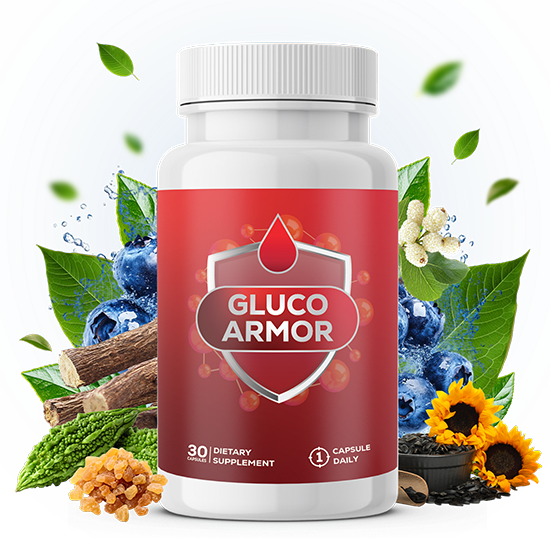
Gluco Armor is a daily dietary supplement — a 30-capsule bottle (one capsule a day with food) — marketed to adults who want to support healthy blood sugar metabolism that's already within the normal range, alongside diet and exercise. The label lists 20 vitamins, minerals and botanicals with each amount disclosed. It's distributed from Aurora, Colorado, advertised as assembled in the U.S., and sold directly through the official website with checkout handled by BuyGoods.
Before the Label: The Ads Problem
You've probably arrived here because of an ad — and that's exactly where the biggest red flag sits. Independent watchdogs have documented Gluco Armor being promoted through AI-deepfake videos of celebrities and public figures who never endorsed it, with promises of "reversing diabetes" in a matter of days. To be blunt: no dietary supplement can reverse or treat diabetes, and any ad claiming otherwise is a reason to walk away, whatever the product.
Two more things to know before buying anything with this name on it: the official sales page itself uses a countdown timer and stock-scarcity theatrics, and credits the formula to a "creator" persona we couldn't verify exists. And on Amazon, there are look-alike "Gluco Armor" listings from third parties that are not the official product — a common pattern around heavily advertised offers, and another way buyers get burned.
What's Inside (and What the Label Actually Says)
Here Gluco Armor genuinely outperforms most competitors: there is no proprietary blend — every one of the 20 ingredients has its dose on the label. The problem is what those doses are. Beyond the six we feature below, the label lists banaba (25 mg), guggul (50 mg), bitter melon (50 mg), licorice (50 mg), yarrow (25 mg), cayenne (10 mg), juniper berries (25 mg), white mulberry (25 mg), alpha-lipoic acid (30 mg), taurine (25 mg), vanadium (0.2 mg), manganese (1 mg), vitamin C (50 mg) and vitamin E (10 mg). Most of these botanicals are typically studied at several hundred milligrams to several grams — a real limitation we cover in the cons.
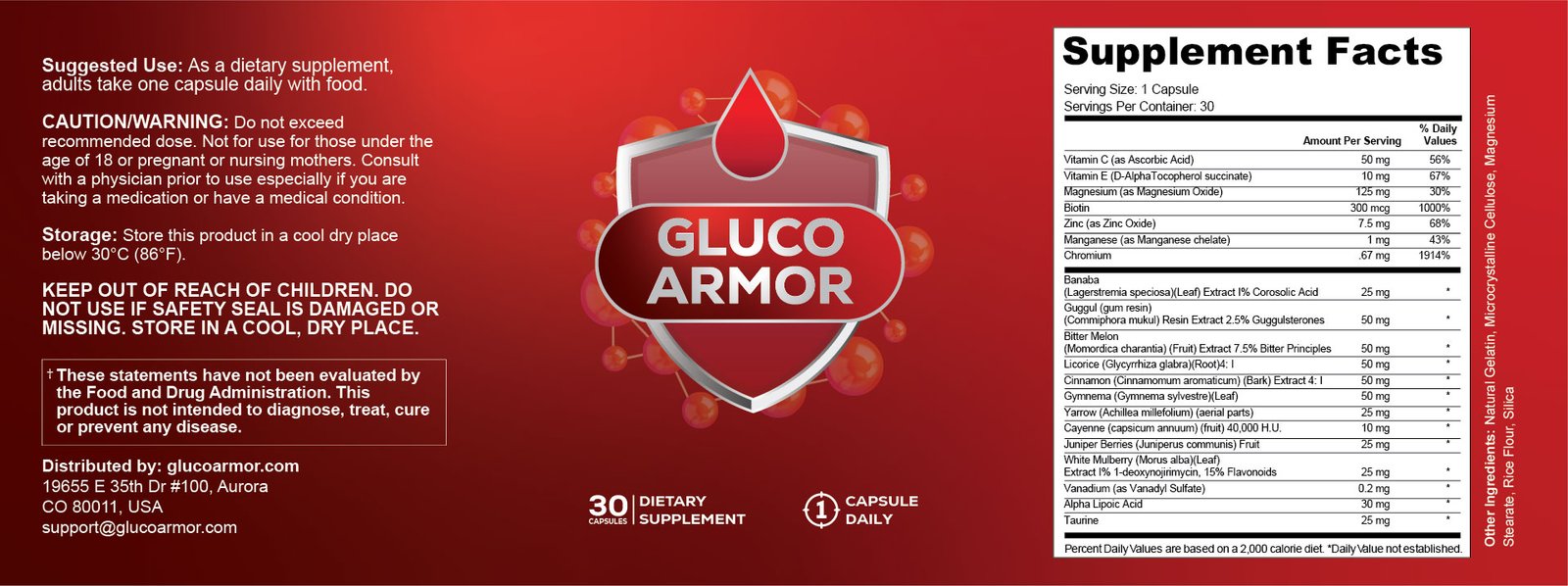
The actual Gluco Armor Supplement Facts label — full dose disclosure, token-level botanical amounts.

Chromium — 670 mcg
The one ingredient at a genuinely meaningful level (1914% DV). A trace mineral with a long track record in formulas supporting normal carbohydrate metabolism.

Biotin — 300 mcg
A B-vitamin (1000% DV) commonly included for its role in normal energy and macronutrient metabolism. Cheap to dose well — and here it is.

Magnesium — 125 mg
A sensible inclusion for normal metabolic function (30% DV) — but supplied as magnesium oxide, the cheapest and least absorbable common form.

Zinc — 7.5 mg
A trace mineral involved in normal carbohydrate metabolism (68% DV) — again as the low-absorption oxide form rather than a chelate.

Cinnamon — 50 mg
A classic botanical in this category — but typically studied at 1–2 grams a day. Even as a 4:1 extract, 50 mg is a token amount.

Gymnema — 50 mg
The best-known glucose botanical, traditionally associated with normal sugar metabolism — usually studied at 200–400 mg of standardized extract, several times what's in here.
Pros & Cons
Pros
- No proprietary blend — all 20 ingredient doses are disclosed on the label, which is genuinely rare in this category
- Chromium at a meaningful 670 mcg — the one active dosed at or above the levels it's typically studied at
- 90-day money-back guarantee on every package, with checkout handled by BuyGoods (an established retailer that processes refunds)
- Once-daily capsule — simple to stick with
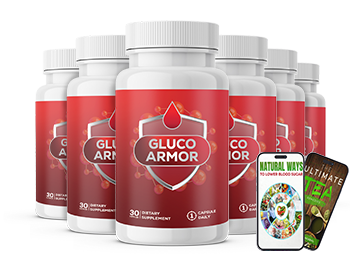
- 3- and 6-bottle bundles ship free in the US and include two bonus wellness eBooks
Cons
- Token botanical doses — cinnamon 50 mg, gymnema 50 mg, white mulberry 25 mg, banaba 25 mg, alpha-lipoic acid 30 mg: fractions of the amounts these ingredients are typically studied at. Twenty ingredients is the marketing; the doses are the reality
- Cheapest mineral forms — magnesium oxide and zinc oxide, the lowest-absorption options available
- Fake-endorsement ad ecosystem — documented deepfake celebrity videos and "diabetes reversal" promises that no supplement can keep
- Trust theatrics on the official page — countdown timers, an unverifiable "4.98/5 from 2,000+ reviews" badge, and a creator persona we couldn't verify
- Look-alike third-party "Gluco Armor" listings on Amazon that aren't the official product
- Premium price ($79/bottle on the 2-pack, $49 on the 6-bottle bundle) for a formula this light; results vary, and a supplement doesn't replace diet, exercise, or medical care
Who Is It For (and Not For)?
The only case we can see for it: you specifically want a one-a-day multivitamin-style capsule with disclosed doses, you mainly care about the chromium and biotin (which are well dosed), and you're treating the 90-day refund window as your safety net.
Not for you if you: expect the botanicals on the label to be present at the levels they're studied at — they aren't — or if you found this product through an ad promising to fix a medical condition. See our Gluco6 review for a more dose-focused alternative. Also skip it if you're pregnant/nursing or on medication (especially blood-sugar medication) — and talk to your doctor first regardless.
Frequently Asked Questions
The Verdict: Not Recommended
Gluco Armor gets one important thing right: a fully disclosed label, with chromium and biotin at meaningful levels. But that same transparency shows botanicals at 25–50 mg token doses, minerals in their cheapest oxide forms, and a premium price for what is effectively a chromium multivitamin — all wrapped in an ad ecosystem of fake celebrity endorsements and disease-reversal promises that should make anyone cautious. We don't recommend it, and we have no affiliate relationship with this product. If you're looking for transparent, meaningful dosing in this category, start with our top-rated pick, Gluco6.
Read Our Top-Rated Pick: Gluco6Medical disclaimer: These statements have not been evaluated by the Food and Drug Administration. This product is not intended to diagnose, treat, cure, or prevent any disease. Always consult a qualified healthcare professional before starting any supplement, especially if you are pregnant, nursing, taking medication, or managing a health condition.
Affiliate disclosure: Glucoreviews.com is reader-supported. We may earn a commission when you purchase through links on this page, at no additional cost to you. This does not influence our assessment. See our full disclosure and review methodology.